
METATRON N.R.G.
Building a new architecture
for compact energy
Room temperature · Desktop scaleExperimental validation underwayRoom temperature · Desktop scale · Experimental validation underway
Not a smaller star.
A different physical approach entirely.
Most leading fusion approaches rely on extreme temperature and/or compression.
Metatron is investigating another regime.
Room-temperature
designed to avoid sun-like pressure and temperature conditions.
Truly Green
designed for zero operating carbon emissions, with no combustion and no fissile fuel.
Direct-To-Electricity
designed to avoid thermal turbine conversion losses.
Desktop scale
small form factor enables faster development and lower R&D cost.
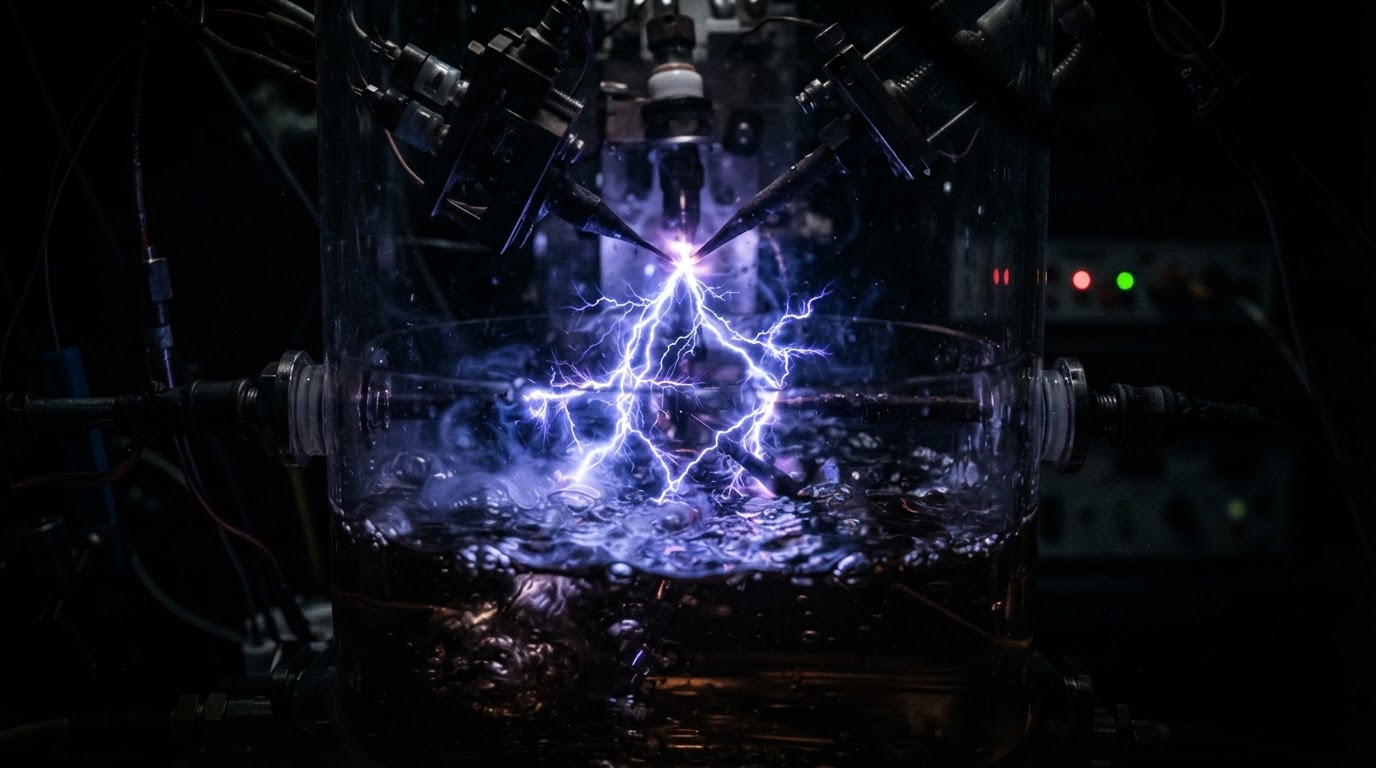
The experiment itself is the most futuristic thing here.
These three frames come from the laboratory's own footage: the discharge inside the tube, the plasmoids organizing into a collective structure, and the rings that spread through the water after a burst.
Inside the sapphire tube.
Eight parts of the compact liquid-plasma apparatus, drawn from the published patent application (WO 2026/167686) and from the lab's operating experience, labeled in the order they come into play. Switch between the two phases to see what each part does while the pulser is on and once the system runs on DC.
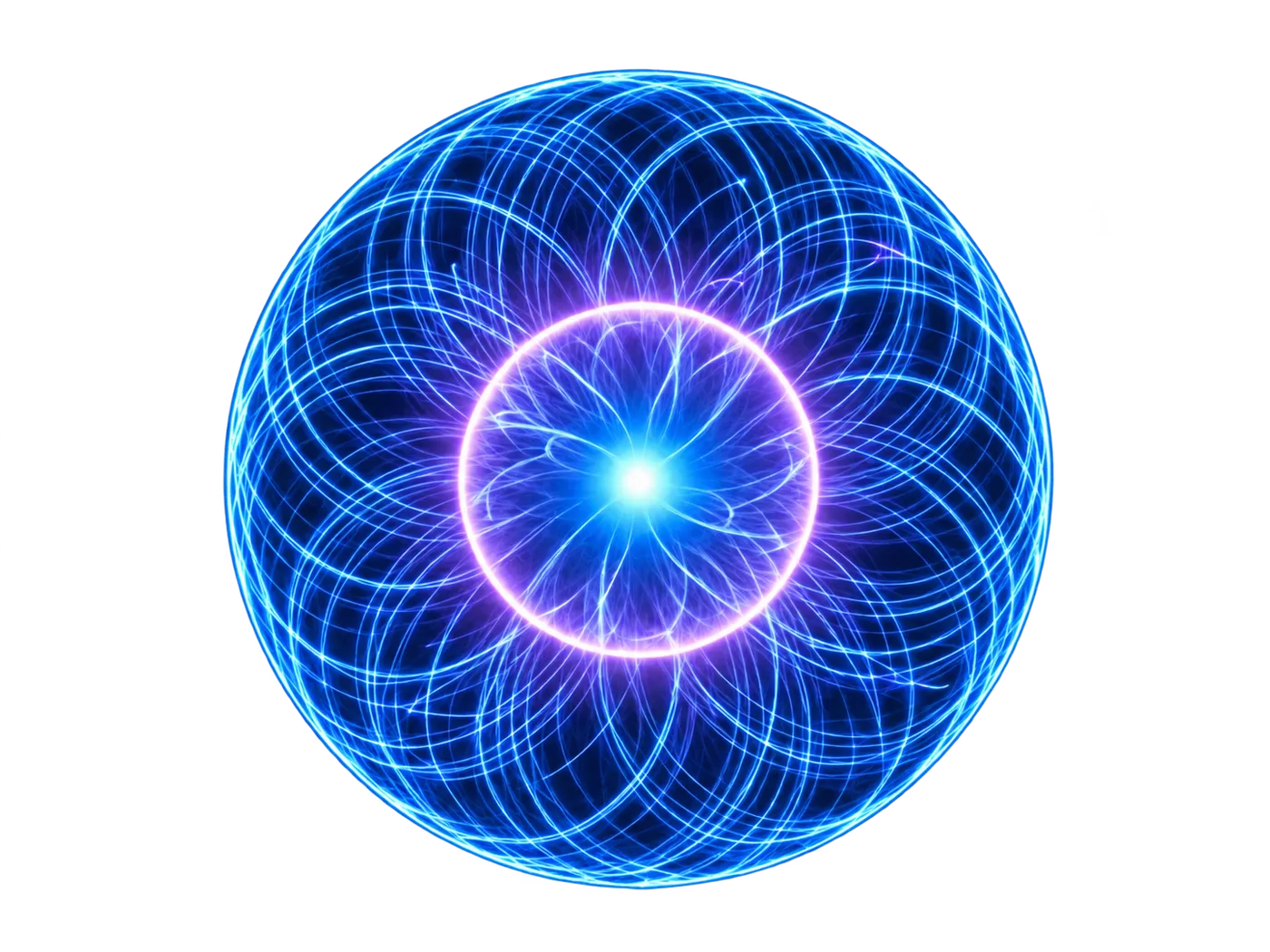
03 · The plasmoid
Structures measured in micrometers
could change the scale of energy generation.
Scale × 0.0
03 · The plasmoid
Structures measured in micrometers
could change the scale of energy generation.
Scale × 0.6
04 · How the system works
One experiment, evolving through six states.
Two liquids meet
A liquid-liquid interface is formed inside the chamber.
A high-voltage pulse
An electrical pulse moves through the interface.
Plasma structures form
Microscopic plasmoid structures emerge at the interface.
The structures organize
Collective, long-lived organization develops.
Ultrasound is applied
A transducer drives the interface with ultrasound to manipulate the structures.
Measurement activates
Diagnostics record electrical input, collected output, light emission and transients.
Rigorous measurement and independent validation are central to the research program.
Observed
Recorded at the bench, repeatedly.
- +Long-lived plasma structures
- +Collective organization
- +Repeatable discharge events
- +Visible light emission
- +Acoustic/mechanical transients
The measurement program
What the lab is measuring now.
- +Electrical and thermal characterization
- +Characterization of the plasmoid structures and their emissions
- +Standardized operating protocols across runs and apparatus
- +Independent validation
The observations are the starting point.
Measurement quantifies how the system performs.
Energy characterization
Electrical and thermal measurements
Plasma diagnostics
Spectroscopy, imaging and synchronized measurements
Standardization
Standardized protocols and configuration control
Scale-up
Optimization and performance development
Results are published after measurement and independent validation.
Card graphics are illustrative.
What could this architecture
make possible at scale?
Compact distributed power
Energy generation at the point of use, without grid dependence.
Direct electrical harvesting
The published patent application includes configurations for direct electrical energy harvesting.
Rapid experimental iteration
A bench you can change daily, not a building you pour for a decade.
What could this architecture
make possible at scale?
Bench-scale apparatus
Compact distributed power
Energy generation at the point of use, without grid dependence.
Direct electrical harvesting
The published patent application includes configurations for direct electrical energy harvesting.
Rapid experimental iteration
A bench you can change daily, not a building you pour for a decade.
From a 1989 notebook to a working bench, by way of physics.
1989
The idea
Clara Szalai traces the original concept: handwritten notes and early sketches.
1990s
Concept drawings
Physics work develops through the decade; notes become cleaner.
2016
Engineering begins
The concept starts to take engineering shape.
2021
Real apparatus
Laboratory work begins. Dr. Yeshayahu Eisenberg leads the experimental program.
2025
The patent application is filed
The priority application, a U.S. provisional, is filed in February. Long-lived collective structures are recorded through the year.
2026
Validation expands
The international application is published in August. The laboratory expands and the measurement program scales.
Patent application published. Measurement program underway.
 FIG. 1 · WO 2026/167686 A1FROM THE PUBLISHED APPLICATION
WO 2026/167686 A1
Method and system for generating energy from plasma
Published 13 August 2026 · 62 claims
In the PCT Written Opinion, which is preliminary and non-binding, claims 1–62 were indicated as appearing novel and involving an inventive step. The opinion did not find industrial applicability established at the search stage; that question is addressed with experimental evidence in the national phase.
The people behind the experiment.
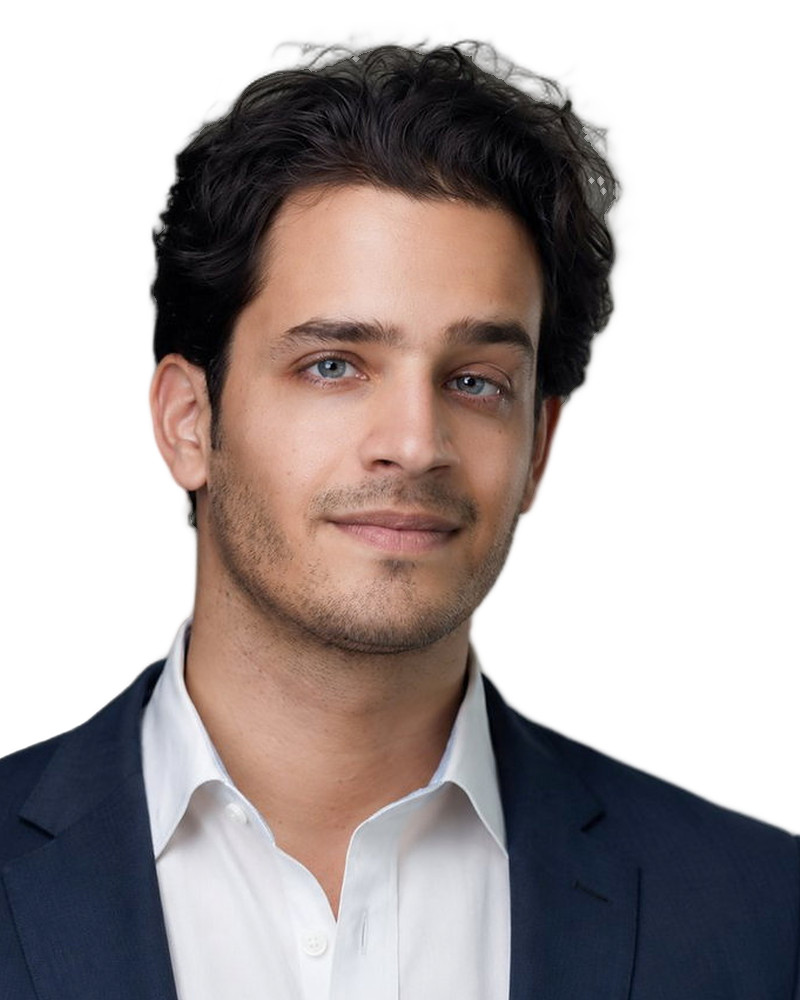
Chief Executive Officer & Chairman
Jonathan Burla
Chief Executive Officer & Chairman
Jonathan Burla
Jonathan leads Metatron's strategy, capital formation and governance, and was the company's first investor, backing the work while it was still an idea. Before Metatron he worked in investment banking at Citigroup and in corporate development and M&A at Prudential. He holds dual degrees from the University of Pennsylvania's Jerome Fisher Management & Technology Program: a BSE in Chemical and Biomolecular Engineering from Penn Engineering and a BS in Economics with a concentration in Finance from the Wharton School.
Jonathan leads Metatron's strategy, capital formation and governance, and was the company's first investor, backing the work while it was still an idea. Before Metatron he worked in investment banking at Citigroup and in corporate development and M&A at Prudential. He holds dual degrees from the University of Pennsylvania's Jerome Fisher Management & Technology Program: a BSE in Chemical and Biomolecular Engineering from Penn Engineering and a BS in Economics with a concentration in Finance from the Wharton School.
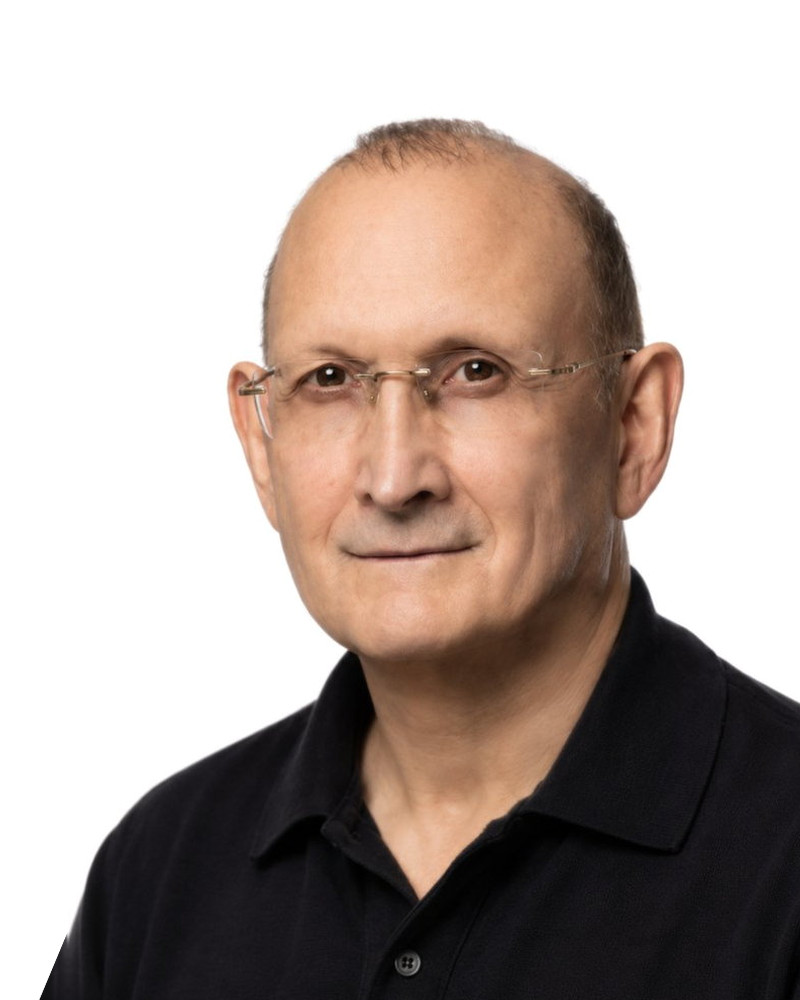
Chief Scientific Advisor · Co-inventor
Dr. Yeshayahu Eisenberg
Chief Scientific Advisor · Co-inventor
Dr. Yeshayahu Eisenberg
Yeshayahu is a co-inventor of the architecture; he led the experimental program from 2021 and now guides it as Chief Scientific Advisor. A theoretical physicist, he earned his PhD in particle physics at the Weizmann Institute of Science and held a postdoctoral fellowship at the Institute for Advanced Study in Princeton, working on supersymmetry and twistor theory; his research was recognized with the Landau Award and a Rothschild Postdoctoral Fellowship. He later led algorithm and signal-processing development for real-time systems at ELTA (Israel Aerospace Industries), and spent more than two decades developing the physical and mathematical framework that became Metatron's core architecture.
Yeshayahu is a co-inventor of the architecture; he led the experimental program from 2021 and now guides it as Chief Scientific Advisor. A theoretical physicist, he earned his PhD in particle physics at the Weizmann Institute of Science and held a postdoctoral fellowship at the Institute for Advanced Study in Princeton, working on supersymmetry and twistor theory; his research was recognized with the Landau Award and a Rothschild Postdoctoral Fellowship. He later led algorithm and signal-processing development for real-time systems at ELTA (Israel Aerospace Industries), and spent more than two decades developing the physical and mathematical framework that became Metatron's core architecture.
Head of Experimental Systems
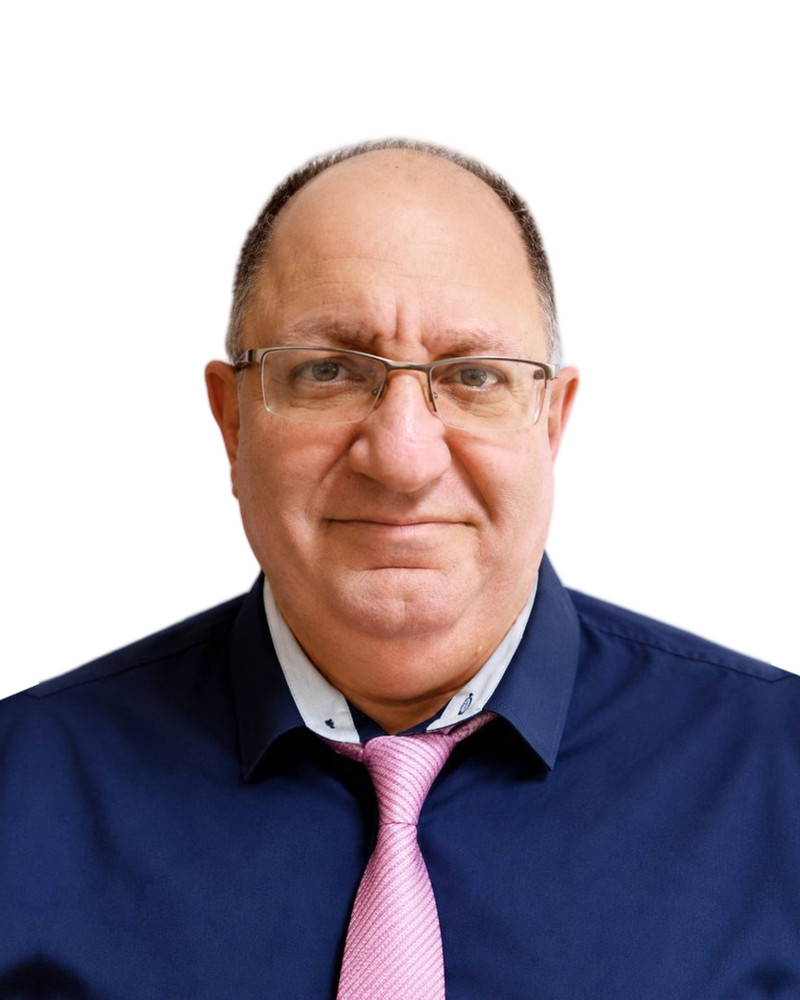
Dr. Ofer Aluf
Head of Experimental Systems
Dr. Ofer Aluf
Ofer is responsible for electrical engineering, instrumentation, RF and microwave systems and electro-optics across the experimental setup. A graduate of Ben-Gurion University, he holds a BSc in Electrical Engineering, an MSc in Physics and a PhD in Electrical and Computer Engineering; his doctoral work on increasing the capacity of optical networks through the nonlinear Fourier transform produced three journal papers. His industry career spans system and integration engineering, chip design and wafer testing, RF and microwave systems verification and semiconductors, with specialties in high-power laser systems, plasma physics, electro-optics, RF and microwave antennas, and NMR and EPR magnet and probe systems. He has published five academic books and numerous refereed papers in professional and IEEE journals.
Ofer is responsible for electrical engineering, instrumentation, RF and microwave systems and electro-optics across the experimental setup. A graduate of Ben-Gurion University, he holds a BSc in Electrical Engineering, an MSc in Physics and a PhD in Electrical and Computer Engineering; his doctoral work on increasing the capacity of optical networks through the nonlinear Fourier transform produced three journal papers. His industry career spans system and integration engineering, chip design and wafer testing, RF and microwave systems verification and semiconductors, with specialties in high-power laser systems, plasma physics, electro-optics, RF and microwave antennas, and NMR and EPR magnet and probe systems. He has published five academic books and numerous refereed papers in professional and IEEE journals.
Head of Lab Operations & Systems
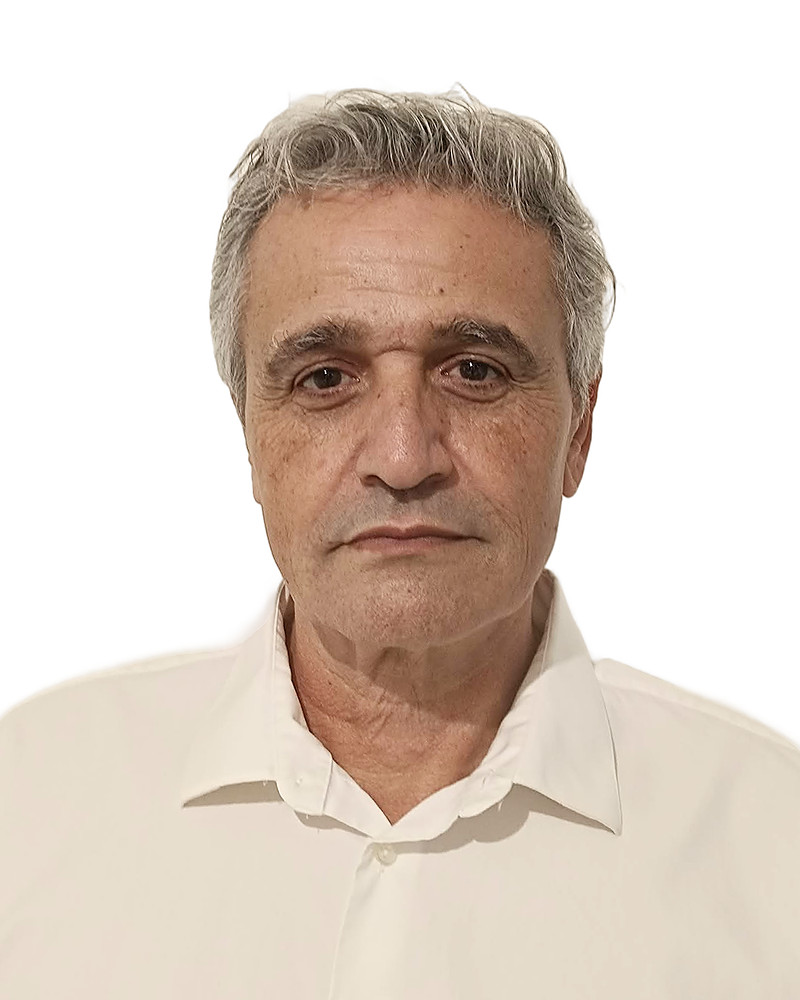
Gideon Alfassi
Head of Lab Operations & Systems
Gideon Alfassi
Gideon runs the laboratory's daily experimental program together with Dr. Aluf and builds its infrastructure: configuration control, experiment protocols, data systems and reproducibility. He co-founded and ran an electrical-panel manufacturing company as COO, after more than twenty years in enterprise software, from R&D group manager at Mercury Interactive and senior product manager at Hewlett-Packard to regional management at BMC Software and ServiceNow and enterprise solution architecture. He holds an MA in Philosophy of Science from Tel Aviv University and a BSc in Mathematics (honors) from Bar-Ilan University.
Gideon runs the laboratory's daily experimental program together with Dr. Aluf and builds its infrastructure: configuration control, experiment protocols, data systems and reproducibility. He co-founded and ran an electrical-panel manufacturing company as COO, after more than twenty years in enterprise software, from R&D group manager at Mercury Interactive and senior product manager at Hewlett-Packard to regional management at BMC Software and ServiceNow and enterprise solution architecture. He holds an MA in Philosophy of Science from Tel Aviv University and a BSc in Mathematics (honors) from Bar-Ilan University.

Co-inventor · Originator of the concept
Clara Szalai
Co-inventor · Originator of the concept
Clara Szalai
Clara is a co-inventor of the architecture. She conceived the original 1989 idea behind it and, over the years that followed, carried it from concept to a working experimental platform, designing and refining the configurations in which the first stable plasmoids were observed. A physicist and systems thinker, she studied at Tel Aviv University, with philosophy studies at Aarhus University.
Clara is a co-inventor of the architecture. She conceived the original 1989 idea behind it and, over the years that followed, carried it from concept to a working experimental platform, designing and refining the configurations in which the first stable plasmoids were observed. A physicist and systems thinker, she studied at Tel Aviv University, with philosophy studies at Aarhus University.